To compare dental service contracts, review the complete support arrangement rather than the annual servicing price alone.
Check which equipment is covered, service frequency, labour, parts, call-outs, travel charges, response priority, remote fault checks, repair approvals, documentation, loan equipment, contract length and price increases.
Compare the likely cost and level of support across one to three years.
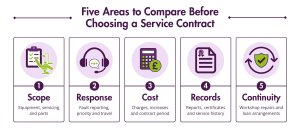
💡 A dental equipment service contract is an agreement that sets out how a provider will inspect, service and support some or all of your practice equipment.
Depending on the provider and agreement, it may cover:
Our annual servicing may include inspection, testing, adjustments, documentation and routine consumables within the quoted service scope. The exact work will depend on the equipment and agreed quotation. We also provide annual reminders and can upload service reports to an online service history.
You should not assume that the word “contract” means every maintenance cost is covered.
The following may be excluded, limited or priced separately:
Parts and call-outs may sometimes be added to a tailored plan, but this depends on the provider and the individual agreement.
Routine servicing does not automatically confirm that every statutory examination or specialist test has been included.
Some pressure systems, imaging equipment and decontamination equipment may have separate examination, validation or documentation requirements.
These should be identified for each item and confirmed in writing when you request a quotation.
Learn more about what Eclipse engineers inspect, test and document during annual dental equipment servicing.
A dental service contract should give you a clear written view of the equipment covered, the work included, the support available and the costs that may arise outside planned servicing.
The strongest comparison looks beyond the service visit itself. It shows how the provider will handle faults, urgent requests, repairs, records, workshop work and changes to your equipment list.
Use the questions below when comparing quotations from different dental engineering providers.
| Area to compare | Questions to ask | Why it matters |
|---|---|---|
| Equipment included | Which items, locations, makes, models and serial numbers are covered? | A quotation may cover selected equipment rather than your full practice inventory. |
| Service frequency | How often will each item be serviced? Is the schedule based on the equipment type, manufacturer guidance and usage? | Different equipment may require different service intervals and checks. |
| Planned service labour | Is all labour for the scheduled service included? Are there limits on visit length or the work carried out? | A low service price may cover a narrower inspection or exclude additional labour. |
| Routine parts and consumables | Which filters, seals or routine consumables are included within the quoted service scope? | Consumable costs can affect the total price, particularly across several surgeries. |
| Breakdown call-outs | Are breakdown visits included, discounted or charged separately? | Annual servicing and breakdown support are often handled as separate services. |
| Engineer travel | Is travel included? Are mileage, congestion or parking charges added? | Travel can add a significant cost when urgent or repeat visits are required. |
| Response priority | What priority will your practice receive when equipment fails? | A provider may offer different access levels for contracted and non-contracted practices. |
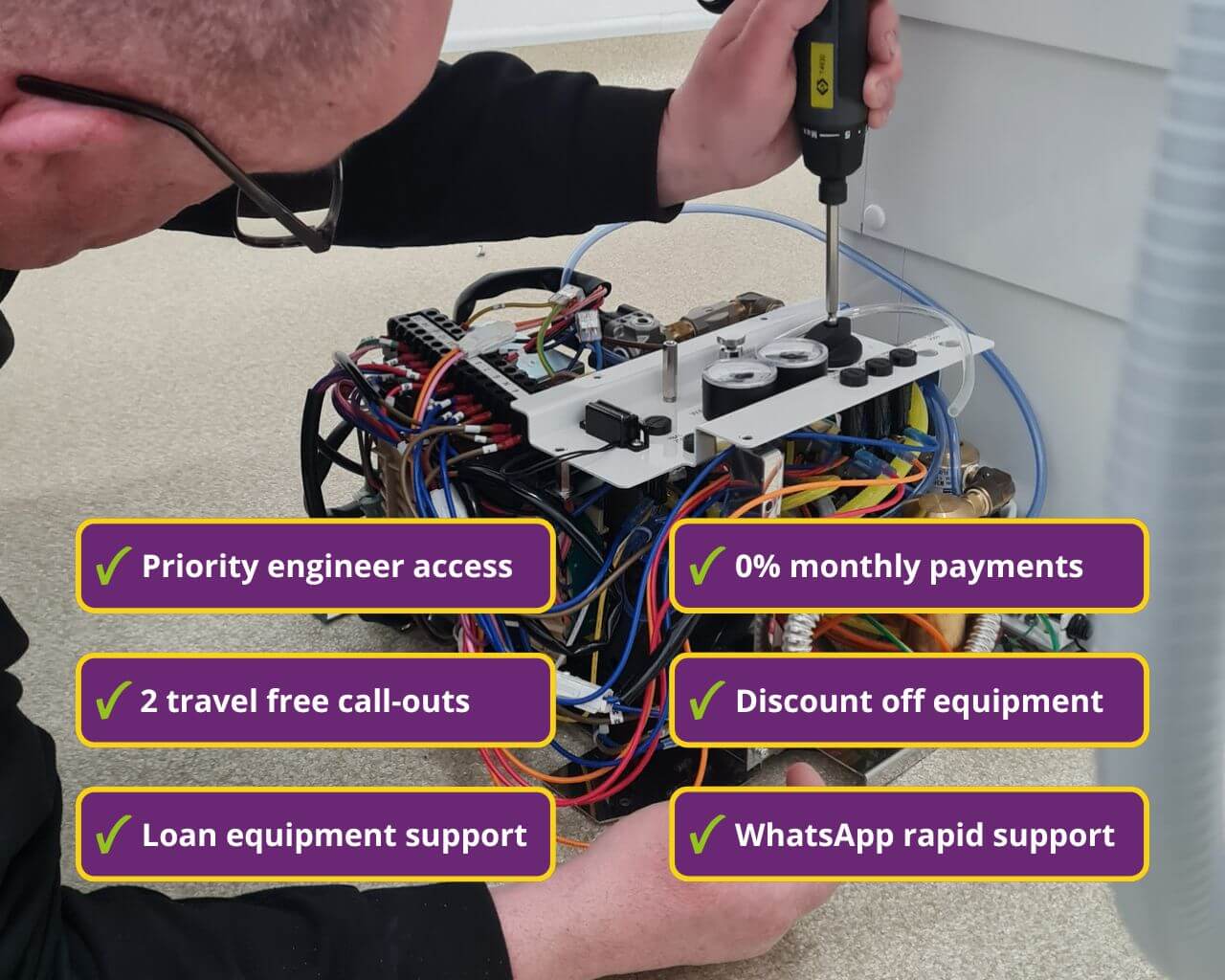
| Remote troubleshooting | Can your team send photographs or video, or speak to an engineer by phone or WhatsApp? | Remote checks can help identify simple faults and prepare the engineer before a visit. |
| Repair quotations and approval | When is a quotation required? Who must approve additional work and how quickly can this be done? | Equipment may remain unavailable while your team waits for internal or supplier approval. |
| Loan equipment | Which loan units may be available, under what terms and for how long? | A temporary unit may help your practice continue while equipment is repaired off site. Availability should always be confirmed. |
| Service reports and certificates | What documents will you receive after each visit? | Clear reports help you track work completed, recommendations and future service dates. |
| Contract period | Is the agreement annual, rolling or fixed for a longer period? | The term affects your flexibility, budgeting and ability to change arrangements. |
| Price increases | Can labour, servicing or support charges increase during the agreement? | A quote that looks competitive in year one may change over a longer comparison period. |
| Cancellation and renewal | What notice is required? Does the agreement renew automatically? | Clear exit and renewal terms help you avoid unexpected commitments. |
| Adding or removing equipment | What happens when you replace a chair, add a surgery or remove an item? | Your equipment schedule and monthly or annual costs may need to be adjusted. |
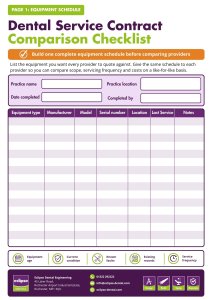
A fair dental equipment servicing comparison starts with the same information being sent to every provider.
Prepare one equipment schedule that includes:
Ask each provider to mark every item as:
This prevents a broad quotation from being compared with one that includes a more detailed equipment list.
Join dentists and practice managers using our resources to plan, build and run better practices.
You can unsubscribe at any time.
The headline service price tells you what planned servicing may cost. It rarely shows the full amount your practice could spend on equipment maintenance during the year.
A lower annual quotation may still be the right option for your practice. You need to check which costs sit outside that figure and how likely you are to incur them.
The likely effect will depend on your equipment list, its age, previous repair history, usage and the amount of operational support your team requires.
A single-year quote can hide the effect of annual price reviews, repeated call-outs and equipment changes.
Build a realistic comparison over at least one year. A three-year view is more useful when you are comparing annual servicing with a fixed-term dental service plan.
Use the same assumptions for each provider.
Annual servicing cost:
Your calculation should remain an estimate. Equipment faults and parts requirements cannot be predicted with certainty.
Downtime is a cost to your practice rather than a supplier charge.
When a chair, compressor, suction pump or sterilisation unit is unavailable, your team may need to:
You can estimate the operational effect by considering:
Unavailable clinical hours × estimated value of that clinical time
Use a sensible internal figure rather than an inflated revenue assumption. The purpose is to compare risk and support arrangements, rather than create a precise financial forecast.
Price remains an important part of your decision. It should be reviewed alongside:
This gives you a more useful view of value, cost exposure and the support available when equipment fails.
You can see how our flexible yearly arrangement works on the annual dental equipment servicing page. For a longer cost comparison, review our three-year dental equipment service plan.
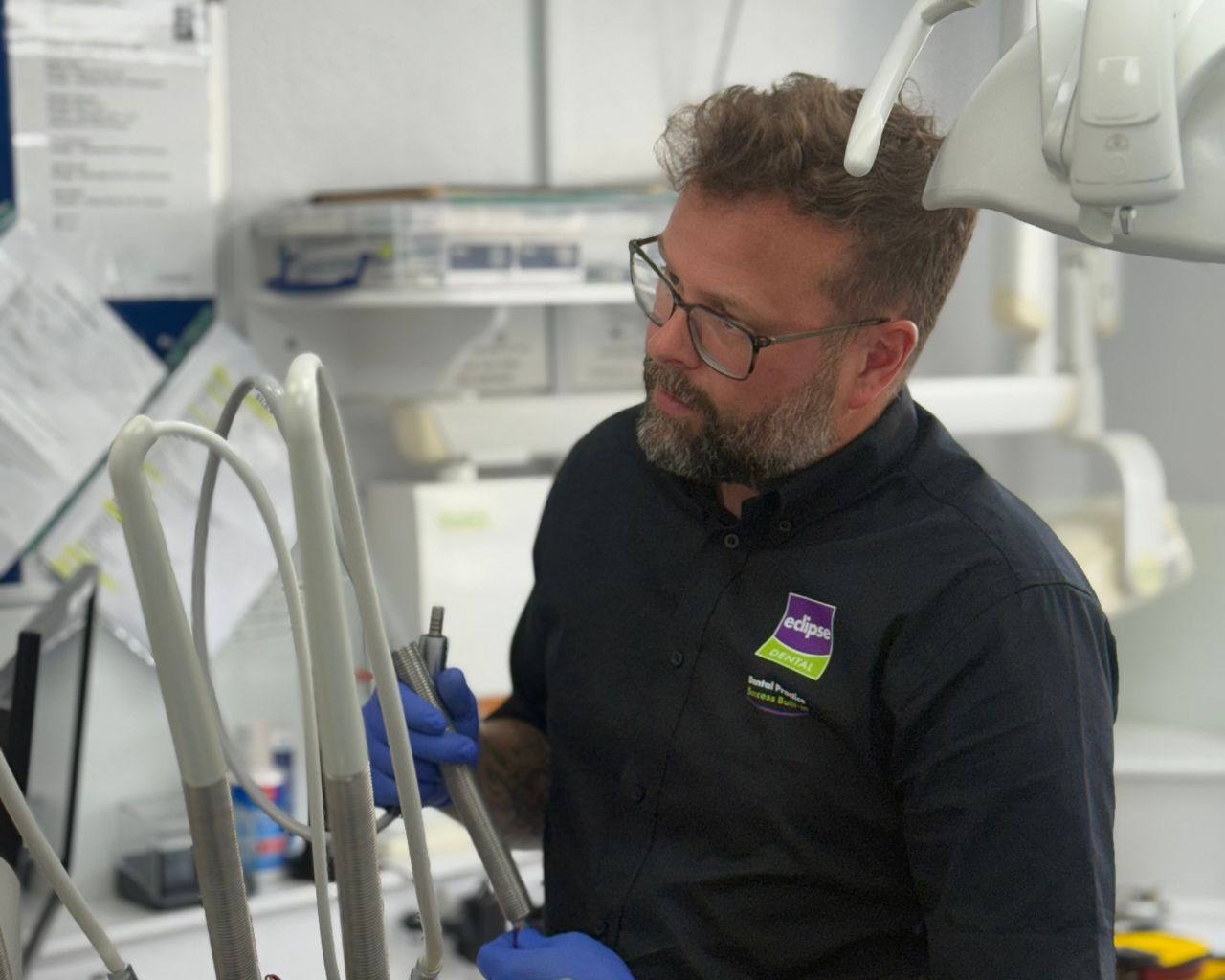
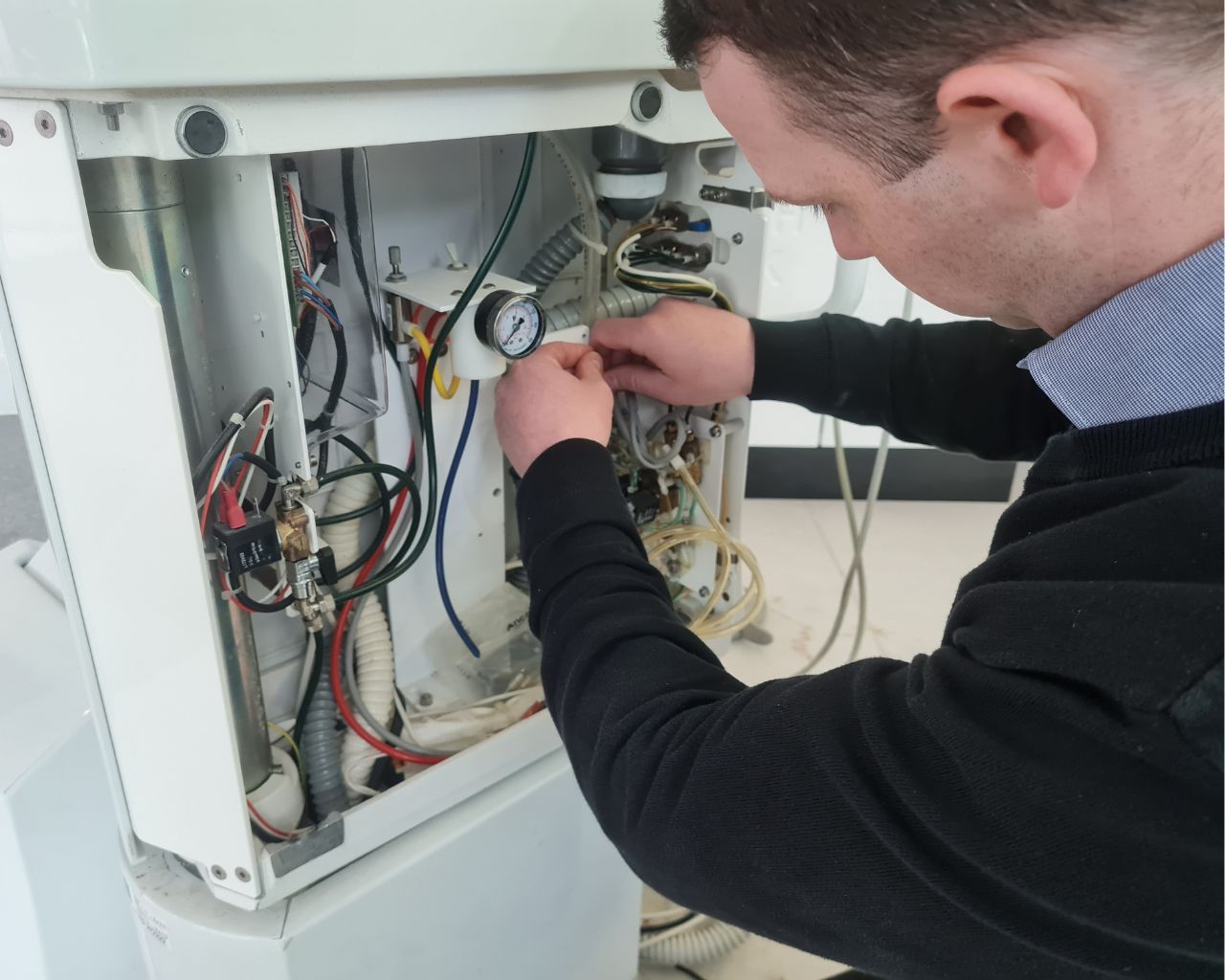
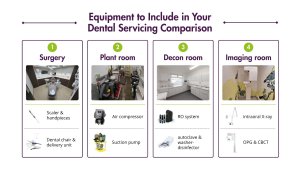
Your comparison should cover every item that affects clinical work, decontamination or the supply of air, suction and water across your practice.
A provider may service some equipment categories while excluding others. Some may also restrict cover by manufacturer, model, age or location. Ask for a written equipment schedule rather than relying on a broad description such as “all surgery equipment”.
Common categories include:
The exact list will depend on your practice and the provider’s technical scope.
Planned servicing and breakdown support should be compared as two connected parts of the same arrangement.
Servicing covers scheduled checks, adjustments and maintenance. Breakdown support sets out what happens when equipment fails unexpectedly, how quickly help is arranged and which costs sit outside the service price.
Use this six-stage process when comparing providers.
Check how your team can request help and when each contact route is monitored.
A provider may accept faults through:
Ask what information is required, such as the equipment type, model, serial number, error code, location and a clear description of the problem.
This helps the provider assess urgency and prepare for the next step.
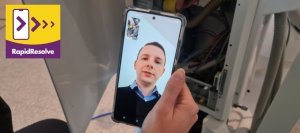
Remote support can help identify simple issues before an engineer attends.
Ask whether the provider can review photographs, videos or error codes and guide your team through suitable checks by phone or WhatsApp.
Remote checks may resolve a minor issue or help the engineer arrive with better information. They will not replace an onsite visit where technical inspection or repair is required.
Our remote support can help your team complete suitable initial checks and arrange attendance where needed.
Confirm what priority your practice will receive and whether visits remain subject to engineer availability.
Ask:
Our three-year service plan includes priority engineer access. With annual servicing, breakdown visits are arranged according to availability.
You should also confirm the full cost of attendance, including call-out fees, travel, mileage, parking, congestion charges and onsite labour.
Ask what usually happens during the first visit.
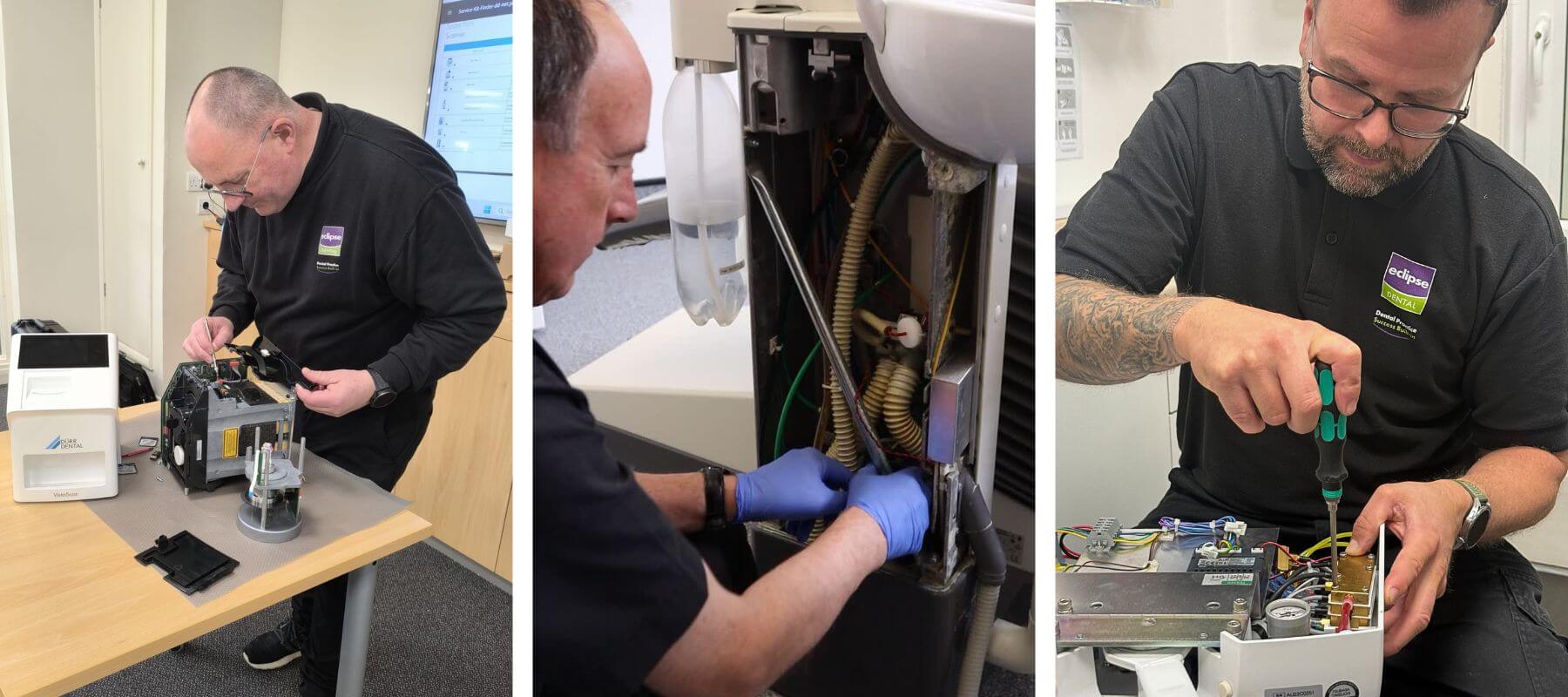
The engineer may:
Check whether engineers carry common parts and whether they can view the equipment’s previous service and repair history before attending.
Also confirm how a second visit will be charged if parts need to be ordered.
Some repairs require approval before additional work can proceed.
Ask:
Our annual servicing allows you to approve additional work as it arises. Our three-year plan uses an agreed support structure that can reduce approval delays.
Some equipment cannot be repaired at your practice.
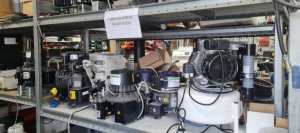
Confirm how collection, assessment, quotation, repair and return are handled. Ask whether reinstallation is included and whether diagnostic or transport charges apply.
Loan equipment may help reduce disruption during a longer repair. Check which items are available, whether stock is guaranteed and what delivery, installation and loan charges apply.
Our workshop repair service is available across EclipseCare arrangements. Loan compressors, autoclaves and suction equipment may also be available, subject to stock, suitability and the repair circumstances.
A useful comparison should show the full journey from fault report to completed repair, including the likely costs and support available at each stage.
Your service provider should give you clear records showing what equipment was inspected, what work was completed and what action may be required next.
These records help you manage maintenance, plan expenditure and prepare evidence for inspections. They should be easy to identify, retrieve and understand.
A service contract cannot guarantee compliance or a particular inspection result. Clear records can still show how your practice has managed servicing, repairs and technical recommendations.
For each visit, you should receive a clear service or repair report.
This should normally include:
Where a certificate is issued, check what it confirms and whether it accompanies the full report.
Your repair history should also show which parts were replaced, whether faults have repeated and whether previous recommendations remain outstanding. This can help you decide when continued repair is becoming less practical than replacement.
Recommendations should be specific enough for you to act on. They should explain what was found, how urgent the issue is and what should happen next.
Some equipment may need records beyond routine servicing.
For pressure systems, confirm whether a written scheme of examination applies, when the next examination is due and who is responsible for arranging it. The HSE guidance on pressure systems and written schemes of examination explains how relevant systems should be identified, documented and examined by a competent person.
For autoclaves and washer-disinfectors, records may include service reports, validation or test results, performance records and next due dates. The CQC guidance on the validation of decontamination equipment explains the documentation practices should have available for inspection.
For intraoral X-ray, OPG and CBCT equipment, records may include installation and acceptance reports, servicing, repairs, calibration and specialist testing documents. The CQC guidance on dental radiography and X-rays covers the safe use, maintenance and performance testing of dental imaging equipment.
Keep routine servicing records separate from specialist examinations and tests so responsibilities, findings and next due dates remain clear.
Ask whether reports and certificates can be accessed online and how long they remain available.
Online service history can help with:
Your practice should also keep a central equipment register.
For each item, record:
Our service records can include reports, certificates, reminders and online service history where this forms part of the agreed arrangement.
The main trade-off is between how easily you can review the arrangement each year and how clearly you can predict costs over a longer period.
Annual servicing gives you more year-to-year control. A longer service plan gives you a more defined structure for servicing, budgeting and access to support.
Neither approach suits every practice. Your choice should reflect your equipment list, budget process, expected support needs and appetite for variable costs.
| Contract feature | Annual servicing | Longer fixed-term service plan |
|---|---|---|
| Contract period | Reviewed or renewed each year | Agreed for a defined period |
| Servicing costs | Paid as services become due | Spread across fixed monthly payments |
| Price reviews | Costs may be reviewed each year | Pricing may be fixed for the agreed term |
| Budgeting | Costs vary according to servicing and support required | Planned costs are easier to forecast |
| Engineer access | Visits arranged according to availability | Priority access may form part of the plan |
| Breakdown costs | Call-outs, travel, labour and parts may be approved when required | Some support terms may be agreed in advance |
| Repair approval | Additional work is usually approved individually | A defined support structure may reduce approval delays |
| Equipment changes | The arrangement can be reviewed each year | The plan may need adjusting when equipment changes |
| Supplier commitment | Easier to reconsider the provider annually | Longer commitment to one servicing provider |
| Administration | Your team may approve and track costs as they arise | More of the schedule and cost structure is agreed in advance |
Our annual servicing and three-year service plan both give your practice access to EclipseCare support. They differ in how servicing costs, engineer access, travel charges and long-term planning are handled.
| Typical practice situation | EclipseCare annual servicing | EclipseCare three-year service plan |
|---|---|---|
| Your equipment is due for servicing | Pay for each service as it becomes due | Fixed monthly cost with 0% finance |
| Your servicing budget is being reviewed | Costs reviewed each year | Pricing locked for three years |
| Equipment develops a fault | Call-out arranged and charged when support is needed | Priority access within a structured 36-month plan |
| You need an engineer quickly | Engineer visit arranged based on availability | Priority engineer access |
| An urgent call-out is required | Travel charged for each visit | No travel fees on two call-outs each year |
| A repair needs approval | Quote reviewed before additional work proceeds | Agreed plan structure can reduce approval delays |
| A fault needs investigating | Remote troubleshooting followed by an onsite visit where required | Remote support with priority onsite assistance where needed |
| Equipment upgrades are being planned | Equipment quoted at standard pricing | Preferential pricing on selected equipment |
Depending on your agreed service scope, our wider EclipseCare support may include:
Your choice should reflect how your practice manages equipment, budgets, repairs and engineer access.
Annual servicing gives you direct control over individual costs and decisions. It can work well where call-outs are infrequent and your maintenance budget can accommodate occasional repairs.
You should allow for separate travel, breakdown, parts and repair costs when preparing your annual budget.
A three-year arrangement can reduce the administrative work involved in planning services and reviewing the servicing budget each year.
You should still check which repair, part and support costs fall outside the monthly payment.
Ask each provider the same questions and request written answers. This makes it easier to compare scope, costs and support without relying on broad marketing descriptions.
EclipseCare gives you a choice between flexible annual servicing and a structured three-year service plan.
Both options are built around your equipment, servicing requirements and the level of support your practice needs.
Our experienced dental engineers provide planned servicing, fault diagnosis and repair across major categories of dental equipment. Remote phone and WhatsApp support can help your team complete suitable initial checks before an onsite visit is arranged.
Your service records can include reports, certificates, recommendations and next-service dates, with online history available where this forms part of your agreement.
Where equipment needs further attention, our workshop repair service can support off-site diagnosis and repair. Loan equipment may also be available, subject to stock, suitability and the repair circumstances.
Key holding can also be arranged where suitable, helping you reduce disruption to appointments and staff time.
Ask our team to review your equipment, current servicing costs and support requirements.
We can show you how annual servicing and a structured three-year plan could work for your practice, including the costs, support terms and commitments attached to each option.
For a tailored comparison, contact our dental engineering team.
A dental equipment service contract should clearly identify the equipment covered, service frequency, planned labour, included consumables, documentation and access to breakdown support. It should also explain what is charged separately, including call-outs, travel, parts, workshop repairs, specialist examinations and loan equipment. The precise scope depends on the provider and individual agreement.
Compare quotations using the same equipment schedule and service requirements. Check the equipment included, service frequency, labour, parts, call-outs, travel, engineer priority, remote support, documents, contract term and price-review conditions. Calculate the likely cost across one to three years rather than comparing only the initial annual service price.
Annual servicing may be enough as a servicing arrangement when it matches the equipment requirements and your practice is comfortable arranging breakdown support separately. You should also consider call-outs, travel, repairs, parts, statutory examinations, equipment records and the operational effect of downtime. The appropriate arrangement depends on your equipment and support needs.
Annual servicing usually provides greater year-to-year flexibility, with services and additional support paid for as required. A three-year plan provides a defined structure across 36 months and may include fixed pricing, monthly payments and priority access. The exact benefits, exclusions and additional charges should be confirmed before you sign.
Breakdown call-outs are only included when the contract explicitly says so. Some providers charge separately for the call-out, travel, labour and parts. Others may include selected call-out benefits or discounted charges. Ask for a written breakdown of each cost and confirm whether repeat visits are charged separately.
Your practice should retain equipment schedules, service reports, certificates, repair histories, parts records, engineer recommendations and next-service dates. Where applicable, keep separate pressure-system, decontamination and imaging documentation. Clear records can support maintenance management and inspection preparation but do not guarantee compliance or a particular inspection outcome.

Eclipse is an amazing company, always responding promptly when we require their assistance. They are providing yearly maintenance and repairs and we were never disappointed.

I had an excellent experience with Eclipse. Their expertise and attention to detail, and professionalism were outstanding from start to finish. The customer service is exceptional, always clear and efficient. I cannot recommend them enough.

Recently moved over to Eclipse from another company and i’m so glad we did. Their pricing is very competitive and they are very good with communication unlike the previous company we were using. We recently had our servicing completed and were very happy! Highly recommend this company!

We highly recommend Eclipse Dental to any dental practice looking for high quality equipment and reliable support. From supplying our dental chairs, CBCT scanner and autoclave to helping us set up our clinic within a very short time frame, it’s been a great experience working with them.

Always responsive, always helpful and have got us out of trouble in a matter of hours on many an occasion! Consistently good service and knowledgeable engineers at reasonable prices. Have already recommended to colleagues.

I have used them for the first time in recent months for a complicated project in carrying out a practice refurbishment. Eclipse were meticulous and brilliant. Very knowledgable engineers and a beautiful finish to my practice. They really are a family based business who will look after you. Very professional company and will definitely keep using them.

I had my 2 surgery practice completely stripped out and services repositioned with new flooring, new equipment and redecorated. They kept to the agreed time scale and we were up and running in our state-of-the-art new surgery. Thank you Eclipse and I will be using your services again.

I did a lot of research looking for a dental fit-out company before I came across Eclipse Dental. They designed the surgery exactly the way I wanted it to look which suits my requirements perfectly. The final result was phenomenal, just phenomenal!

The engineers that attend our practice are very knowledgeable and always act in a professional manner. If we have an emergency situation John Boyt always tries his best to fit us in. I have no hesitation in recommending Eclipse Dental Engineering to you for all your servicing and breakdown needs.

Eclipse listened to my ideas, they added a lot to them and improved my initial design. They had loads of realistic and creative ideas for a 21st century dental practice! Two surgeries were refurbished on time without any interruption of our clinics.

We would highly recommend the awesome Eclipse team who guided us through the design process, finishing touches and colour schemes. Their ability to combine build works with equipment and dental engineering makes it so much easier and better value.

I am very pleased with the result, it is of a high quality and surpassed my expectations, on the strength of the work done I commissioned some extra wall cabinetry. The whole process was hassle-free and I would be very happy to recommend Eclipse to my friends in the business.
We used Eclipse recently in an emergency as we had equipment failure. They were very quick to respond to our call and were able to get us working again within 2 hours. The engineer was very friendly and professional and I would highly recommend this company.

I would like to express my gratitude to you and your team for your professionalism and prompt response when our dental chair packed up. You attended the same day, removed the damaged chair and installed a rental to allow us to continue practising.

Having dealt with many fit-out companies over the years, Eclipse Dental has been one of the most professional, dependable and sincere companies I have ever worked with. I would not hesitate to use their services again.

Excellent service, Eclipse have worked tirelessly for us and have always come out same day if we have a problem stopping us working. Thanks to all at Eclipse.

Their awareness of CQC regulations regarding equipment relocation and our necessity to minimise downtime was brilliant. We would like to recommend Eclipse Dental to anyone considering a refurbishment or relocation.

Very happy with the service and reliability of the team. From the beginning to the end, everyone was always helpful and very kind. I definitely will recommend Eclipse Dental!
I liked how swiftly the projects were done. Everything was managed, everything was timed and everything was coordinated. And every day we saw something happening. It was very exciting.

The quality of craftsmanship was exceptional—the cabinetry, flooring and all custom elements were made precisely to our specifications and aligned perfectly with our vision for the space.

Brilliant. Just professional! Complete refit of surgery. Flawless.

The boys did well! We didn’t give them much time to prepare but they did a great job, extremely pleased.

We have had the chairs for some time now and are happy with them. They serve what we need them for. The aftercare service is excellent

Eclipse are very flexible and listen to your needs. We are very impressed with the quality of workmanship they delivered. I would not hesitate to continue recommending Eclipse.
Eclipse were always accommodating of any requests and would always go the extra mile. I look forward to working with them for many years to come.

We are delighted with the end result. The practice looks good and, more importantly, works ergonomically and efficiently.