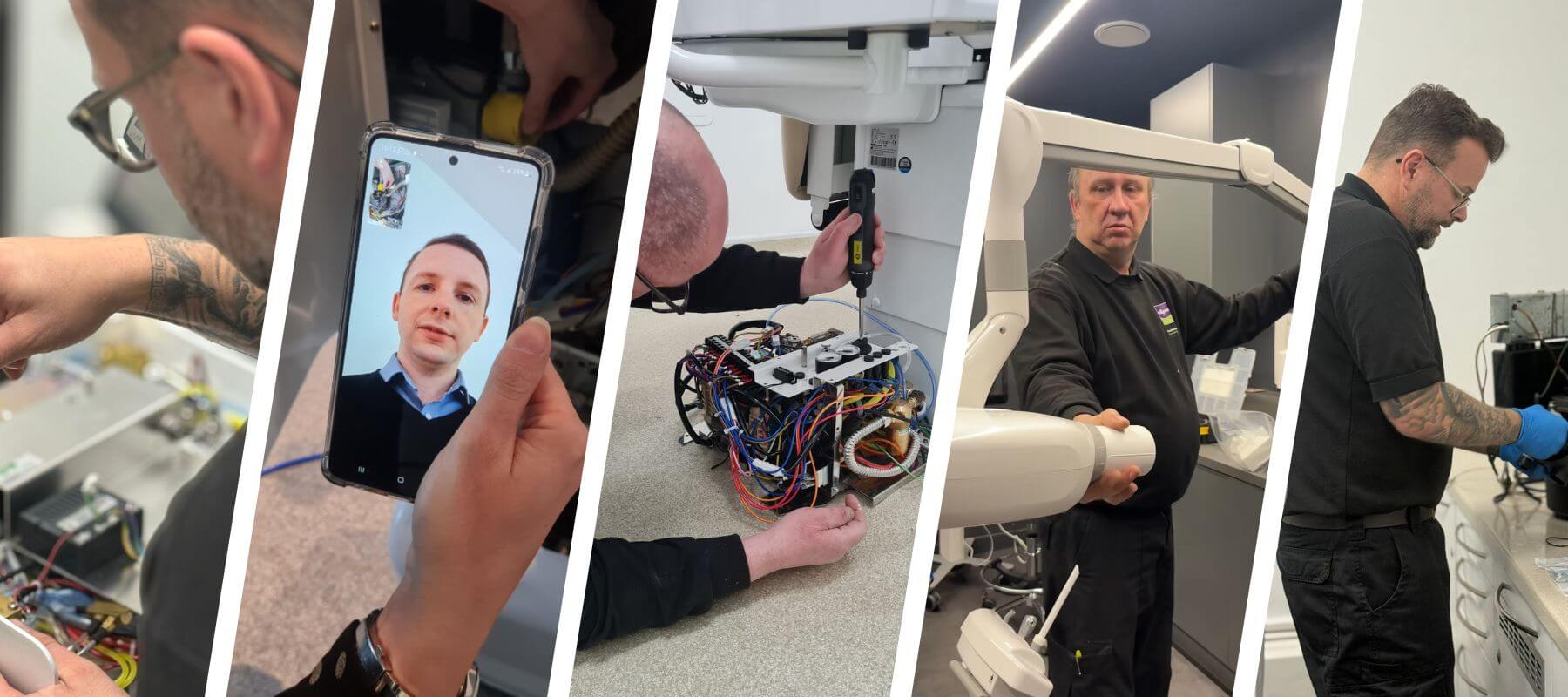
Installation is not the finish line.
Once your equipment is in place, the real test starts. Day-to-day use, cleaning routines and how your team works around the surgery begin to shape how that equipment performs.
Most problems don’t happen on day one. They build slowly. A missed clean. A filter not changed. A small issue ignored.
Over time, these turn into breakdowns, disruption and lost chair time.
This is where many practices get caught out. The focus is on getting equipment installed, but not on what happens next.
In this article, you’ll see what actually causes equipment problems after installation and what you can do to prevent them before they affect your practice.
If you’re setting up a new practice, this becomes even more important. Equipment decisions and maintenance planning go hand in hand from the start.
You can download our “Step-by-Step Guide to Starting a Squat Dental Practice” to see how this fits into your wider setup and avoid issues before they begin.
Once your equipment is installed and handed over, it moves from a controlled setup into a working environment.
Your team starts using it under pressure. Cleaning routines vary between staff. Daily workloads increase. Small inconsistencies begin to appear.
This is where performance is either protected or slowly reduced.
In the first few years, most issues are minor. Slight drops in suction performance. Early wear in moving parts. Small changes in how systems respond.
These are easy to miss and often ignored because everything still “works”.
Without structure, those small issues don’t stay small.
They build over time, leading to avoidable faults, reduced efficiency and eventually equipment failure.
This is why post-installation support matters.
Ongoing support, structured servicing and clear maintenance processes are what keep your practice running consistently.
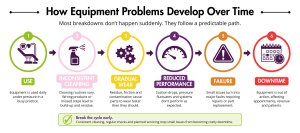
Most equipment failures are not random.
They follow predictable patterns based on how the equipment is used, cleaned and maintained over time.
If you understand these early, you can prevent the majority of issues before they affect your day-to-day operations.
For a deeper breakdown of specific faults, you can also read: Common Equipment Breakdowns and Why They Occur
Cleaning is not just about hygiene. It directly affects how your equipment performs.
Using the wrong products or inconsistent routines leads to residue build-up. Over time, this starts to affect internal components, airflow and moving parts.
When different team members follow different processes, small variations quickly add up.
What starts as a minor issue can lead to reduced performance or avoidable damage.
Take a look at our Best Cleaning Products for Dental Equipment (And What to Avoid).
We’ve aligned every tip with manufacturer guidance and UK HTM 01-05 decontamination standards, so you can be confident your cleaning routine protects your patients, your staff and your equipment.
A common pattern is waiting until something breaks before taking action.
By that point, the issue has already developed.
Preventative servicing is designed to catch early signs of wear, replace key components and keep everything running as expected.
When servicing is missed or delayed, the risk of failure increases. What could have been a simple fix often becomes a more complex and costly repair.
Most breakdowns give early warning signs.
Unusual noise. Reduced pressure. Slower response. These are often dismissed because the equipment is still functioning.
The problem is that these early signs rarely resolve on their own.
Ignoring them allows the issue to develop further, increasing the chance of downtime and disruption when it eventually fails.
Handover training is often treated as a one-off step.
In reality, it needs to carry through into daily use.
New staff join. Processes change. Small shortcuts are introduced. Over time, equipment is no longer being used as intended.
This leads to avoidable strain on components and inconsistent performance across the practice.
Without a defined structure, maintenance becomes reactive.
There is no clear schedule. No accountability. No tracking of what has been checked or serviced.
This creates gaps where issues go unnoticed.
A simple, consistent structure removes that risk. It ensures that every part of your equipment is checked, maintained and performing as it should.
Most equipment issues don’t come from one major failure.
They come from small decisions made over time.
One of the most common assumptions is simple. “It’s new, so it’s fine.”
At the start, that is often true. But without the right structure in place, performance starts to drift. Small inconsistencies in cleaning. Servicing pushed back. Early warning signs ignored.
Servicing is often treated as optional rather than essential. Cleaning is treated as basic hygiene rather than part of equipment care.
This creates a reactive approach.
Something breaks. You deal with it. Then move on.
The problem is that most breakdowns are not sudden. They have been developing in the background for weeks or months.
In many cases, the issue could have been prevented with a simple check or routine service.
This is where the difference sits.
Practices that run smoothly are not reacting to problems. They are working to prevent them.
You don’t need a complex system to maintain your equipment properly.
What you need is consistency.
A clear structure removes guesswork and makes it easier for your team to follow the same process every day.
Start with a simple framework:
| Frequency | What to focus on |
|---|---|
| Daily | Cleaning, visual checks |
| Monthly | Filters, basic performance checks |
| Annually | Full servicing, compliance checks |
Daily cleaning plays a direct role in how your equipment performs.
This is not just about infection control. It affects airflow, pressure and the condition of internal components.
Use the correct cleaning products. Follow a consistent routine across your team. Check for anything unusual during use.
Monthly checks are where small problems are identified early.
Filters, traps and moving parts should be reviewed. Performance should be consistent across surgeries.
This is where many preventable issues are caught before they develop further.
Annual servicing is where your equipment is properly assessed.
Components are checked, worn parts are replaced and performance is tested against expected standards.
This is also critical for compliance. Having clear service records supports inspections and reduces risk.
Join dentists and practice managers using our resources to plan, build and run better practices.
You can unsubscribe at any time.
The framework only works if it is followed.
Clear responsibility, simple checklists and regular reviews make this easier to manage across your team.
Small, consistent actions prevent larger disruptions later.
For a more detailed breakdown of daily and routine care, see:
The Importance of Routine Care and Maintenance for Dental Equipment
If you want practical tools to support this:
These are designed to help you keep control of your equipment without adding complexity to your day.
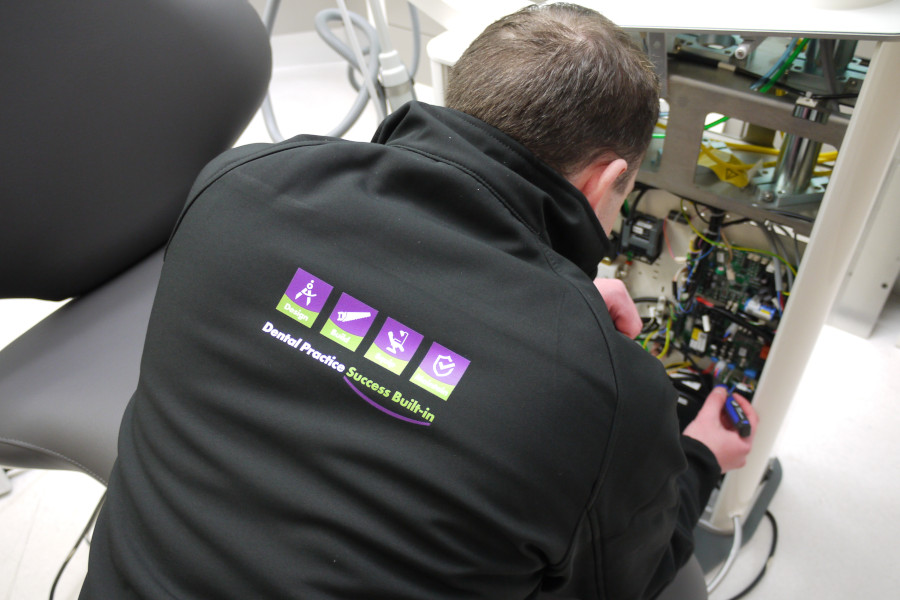
There is a point where internal routines are no longer enough.
This usually shows up in a few clear ways.
Issues start repeating. The same faults come back. Small fixes stop holding. What used to be manageable starts to take more time and attention.
Downtime begins to affect your patients. Appointments are disrupted. Staff are working around equipment instead of relying on it.
This is where a service partner changes how your practice runs.
Instead of reacting to problems, you move to a planned approach. Equipment is monitored, serviced and supported in a structured way.
At Eclipse, the focus is not just on fixing faults. It is on preventing them.
With an engineering-led approach, issues are identified early and resolved before they affect performance. Servicing is based on how your equipment is actually used, not just a checklist.
When something does go wrong, response matters. Same-day engineer support and ongoing access to technical advice helps reduce disruption and keep your practice running.
If you want to move from reactive fixes to structured support, you can explore:
If you want to reduce downtime, you can speak directly with our engineers or explore our service plans to see what support looks like in practice.
Dental equipment does not maintain itself.
Performance is shaped by how it is used, cleaned and supported over time.
Without structure, small issues build. Over time, they lead to avoidable breakdowns, disruption and cost.
Maintenance is what protects your investment.
A clear framework, consistent routines and the right level of support keep your equipment reliable and your practice running as it should.
Early failure is usually not due to a single fault. It is caused by a combination of inconsistent cleaning, missed servicing and small issues being ignored. Most problems develop gradually rather than happening suddenly.
Servicing should follow the manufacturer’s guidelines from the start. In most cases, this means annual servicing, with daily and monthly checks carried out in between. The key is to have a structure in place from day one.
Yes. Using the wrong products or inconsistent cleaning routines can lead to residue build-up and internal damage. Over time, this affects performance and can shorten the lifespan of key components.
Yes. New equipment still requires structured maintenance. Without a plan, performance can decline within the first year. Planning maintenance early helps prevent issues and keeps everything running as expected.
Servicing typically includes inspection, testing and replacement of worn components, along with performance checks and compliance documentation. It ensures your equipment is operating safely, reliably and in line with regulations.

Eclipse is an amazing company, always responding promptly when we require their assistance. They are providing yearly maintenance and repairs and we were never disappointed.
I had an excellent experience with Eclipse. Their expertise and attention to detail, and professionalism were outstanding from start to finish. The customer service is exceptional, always clear and efficient. I cannot recommend them enough.

Recently moved over to Eclipse from another company and i’m so glad we did. Their pricing is very competitive and they are very good with communication unlike the previous company we were using. We recently had our servicing completed and were very happy! Highly recommend this company!

We highly recommend Eclipse Dental to any dental practice looking for high quality equipment and reliable support. From supplying our dental chairs, CBCT scanner and autoclave to helping us set up our clinic within a very short time frame, it’s been a great experience working with them.
Always responsive, always helpful and have got us out of trouble in a matter of hours on many an occasion! Consistently good service and knowledgeable engineers at reasonable prices. Have already recommended to colleagues.

I have used them for the first time in recent months for a complicated project in carrying out a practice refurbishment. Eclipse were meticulous and brilliant. Very knowledgable engineers and a beautiful finish to my practice. They really are a family based business who will look after you. Very professional company and will definitely keep using them.

I had my 2 surgery practice completely stripped out and services repositioned with new flooring, new equipment and redecorated. They kept to the agreed time scale and we were up and running in our state-of-the-art new surgery. Thank you Eclipse and I will be using your services again.

I did a lot of research looking for a dental fit-out company before I came across Eclipse Dental. They designed the surgery exactly the way I wanted it to look which suits my requirements perfectly. The final result was phenomenal, just phenomenal!
The engineers that attend our practice are very knowledgeable and always act in a professional manner. If we have an emergency situation John Boyt always tries his best to fit us in. I have no hesitation in recommending Eclipse Dental Engineering to you for all your servicing and breakdown needs.
Eclipse listened to my ideas, they added a lot to them and improved my initial design. They had loads of realistic and creative ideas for a 21st century dental practice! Two surgeries were refurbished on time without any interruption of our clinics.

We would highly recommend the awesome Eclipse team who guided us through the design process, finishing touches and colour schemes. Their ability to combine build works with equipment and dental engineering makes it so much easier and better value.

I am very pleased with the result, it is of a high quality and surpassed my expectations, on the strength of the work done I commissioned some extra wall cabinetry. The whole process was hassle-free and I would be very happy to recommend Eclipse to my friends in the business.
We used Eclipse recently in an emergency as we had equipment failure. They were very quick to respond to our call and were able to get us working again within 2 hours. The engineer was very friendly and professional and I would highly recommend this company.

I would like to express my gratitude to you and your team for your professionalism and prompt response when our dental chair packed up. You attended the same day, removed the damaged chair and installed a rental to allow us to continue practising.
Having dealt with many fit-out companies over the years, Eclipse Dental has been one of the most professional, dependable and sincere companies I have ever worked with. I would not hesitate to use their services again.
Excellent service, Eclipse have worked tirelessly for us and have always come out same day if we have a problem stopping us working. Thanks to all at Eclipse.

Their awareness of CQC regulations regarding equipment relocation and our necessity to minimise downtime was brilliant. We would like to recommend Eclipse Dental to anyone considering a refurbishment or relocation.

Very happy with the service and reliability of the team. From the beginning to the end, everyone was always helpful and very kind. I definitely will recommend Eclipse Dental!
I liked how swiftly the projects were done. Everything was managed, everything was timed and everything was coordinated. And every day we saw something happening. It was very exciting.

The quality of craftsmanship was exceptional—the cabinetry, flooring and all custom elements were made precisely to our specifications and aligned perfectly with our vision for the space.

Brilliant. Just professional! Complete refit of surgery. Flawless.

The boys did well! We didn’t give them much time to prepare but they did a great job, extremely pleased.

We have had the chairs for some time now and are happy with them. They serve what we need them for. The aftercare service is excellent

Eclipse are very flexible and listen to your needs. We are very impressed with the quality of workmanship they delivered. I would not hesitate to continue recommending Eclipse.
Eclipse were always accommodating of any requests and would always go the extra mile. I look forward to working with them for many years to come.

We are delighted with the end result. The practice looks good and, more importantly, works ergonomically and efficiently.