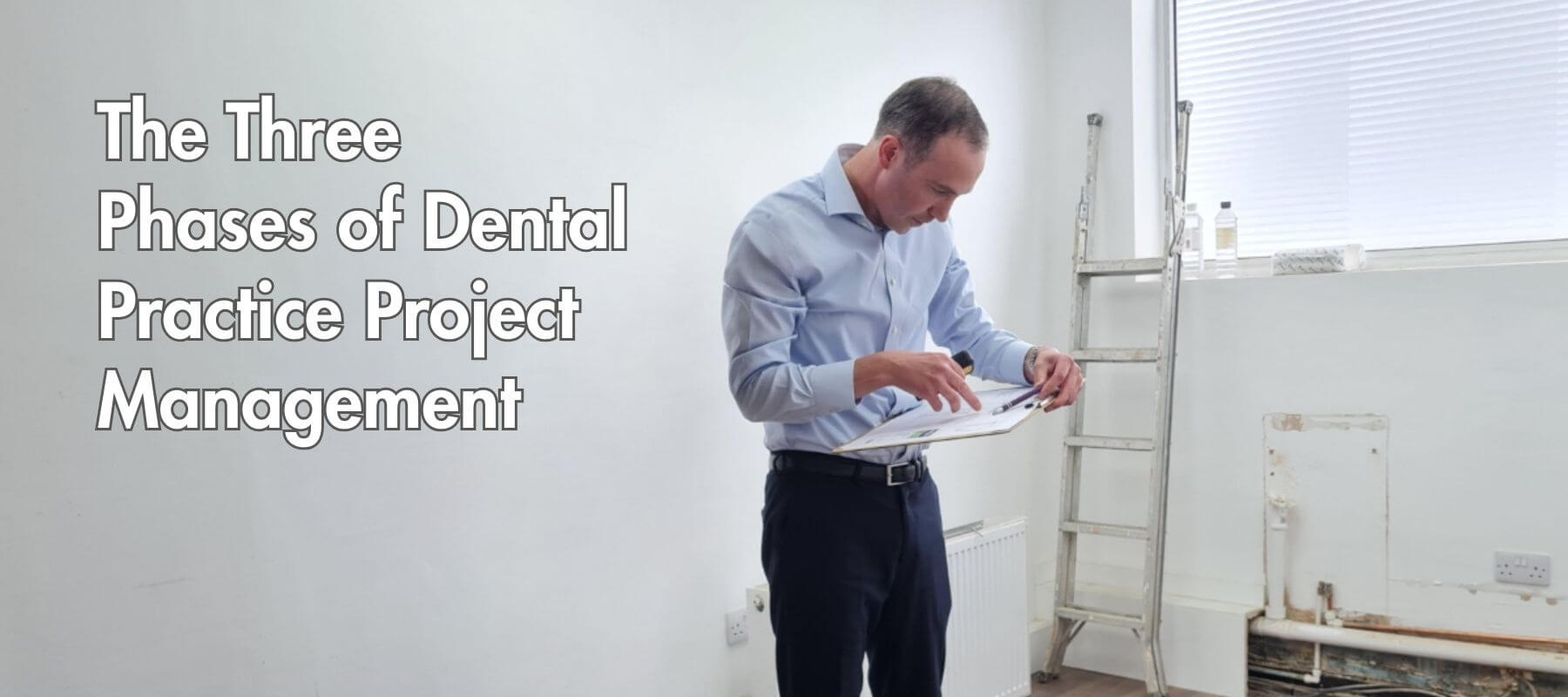
Managing a dental practice build or refurbishment is not about chasing trades or ticking boxes. It’s about controlling risk.
Poor project management is rarely obvious on day one. It shows up later as delays, cost creep, compliance issues and compromised workflows.
Whether you are planning a new squat practice or refurbishing an existing one, structured project management is what keeps the outcome aligned with your original intent.
This article sets out what effective dental practice project management looks like and why it matters.
Before drawings, quotes or schedules, you need clarity.
You should be clear on:
A cosmetic-led practice with long appointments demands something very different from a high-throughput family practice.
That difference affects layout, equipment choices, circulation, storage and compliance requirements.
If this intent is not defined early, decisions drift. The project becomes reactive. Timelines and budgets suffer as a result.
Most dental projects fail quietly between phases, not during obvious problems. A clear structure prevents that.
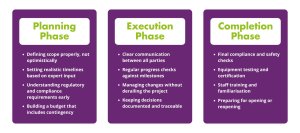
This is where most risk is either removed or locked in.
Key elements include:
The most common mistake here is planning to the minimum possible timescale. That leaves no room for hidden issues, design changes or supplier lead times.
A plan should reflect reality, not best-case assumptions.
This is where coordination matters more than speed.
Effective project management during execution focuses on:
Projects often slip when communication breaks down. Decisions made verbally or informally tend to resurface later as disputes, delays or additional costs.
Finishing a project is more than handing over keys.
This phase should include:
Rushing this stage creates problems after launch, when downtime is far more expensive.
Budget overruns rarely come from one large mistake. They come from small decisions made without context.
Common causes include:
Good project management balances cost against long-term performance. In many cases, spending slightly more upfront avoids repeated disruption and expense later.
This is particularly relevant when practices attempt to self-manage complex projects without prior experience.
Join dentists and practice managers using our resources to plan, build and run better practices.
You can unsubscribe at any time.
Some issues appear again and again across both new builds and refurbishments.
Underestimating time
Expert timescales are usually realistic. Treating them as pessimistic causes immediate pressure later.
Budget blind spots
Existing services, flooring, walls and drainage often hide problems that only appear once work begins.
Poor communication
Unclear responsibility leads to delays and rework.
Regulatory oversights
Missed compliance details can halt progress or require expensive corrections.
Each of these is avoidable with structured planning, regular reviews and documented decision-making.
Effective project management relies on organisation.
You should expect to manage or coordinate documentation such as:
When documents are missing or disorganised, inspections and approvals slow the project down. Clear documentation keeps momentum and reduces stress during handover.
The principles of project management are the same, but the risks differ.
New builds typically involve:
Refurbishments often involve:
Refurbishments can feel harder despite smaller scope, because unknowns are more common.
Project management is only one part of starting a squat practice, but it is a critical one.
Early-stage decisions around vision, scope, budget and sequencing shape everything that follows. This article is designed to give you the strategic framework.
For a deeper, step-by-step view of the full journey, including finance, location and viability, the Starting a Squat Practice ebook expands on each stage in detail.
If you are early in planning, focus on clarity and structure before speed. If you are already mid-project, step back and assess whether decisions are being managed or simply reacted to.
Strong project management does not remove all risk. It ensures risks are visible, controlled and aligned with the outcome you actually want.
If you would like support with planning, coordination or full dental practice project management, you can speak directly with our team. We work with practices at every stage, from early feasibility through to delivery and handover, for both new builds and refurbishments.
Contact us to discuss your project and understand what structured project management support would look like for your practice.
Explore how we have supported dental practices with their build projects from coordination to full turn-key fit-outs.
Dental practice project management is the structured planning, coordination and oversight of a build or refurbishment. It covers scope, timelines, budget control, compliance, communication and delivery from initial intent through to opening. The goal is to reduce risk, not just complete the work.
Yes. Smaller refurbishments often carry higher risk because hidden issues are more common and work is frequently carried out in live practices. Without clear project management, minor changes can quickly lead to delays, unexpected costs and disruption to patient care.
You can, but most issues arise when experience is limited. Dental projects involve specialist compliance, sequencing and equipment integration that general construction experience does not cover. Many practices attempt self-management once, then choose professional support for subsequent projects after experiencing avoidable issues.
Planning to best-case timelines. Using minimum lead times and optimistic assumptions leaves no margin for hidden works, design changes or regulatory checks. Realistic planning almost always delivers faster overall outcomes.
From the start. Compliance cannot be bolted on later without cost and delay. Layout, services, equipment positioning and documentation all affect CQC readiness. Early consideration avoids redesign and rework during execution.
Most overruns come from:
Strong project management identifies these risks early and builds in contingency.
The principles are the same, but squat practices involve more early-stage decision-making around viability, layout and infrastructure. Project management becomes part of a wider planning journey rather than a standalone task. This is why it works best when aligned with a structured squat practice plan.
Typically:
Keeping these organised prevents delays at handover and during inspections.
As early as possible. Early involvement allows better sequencing, clearer budgets and fewer compromises later. Bringing support in mid-project usually means correcting decisions rather than optimising them.
By planning sequencing properly, managing changes carefully and completing checks before reopening. Downtime is rarely caused by one issue. It is usually the result of several small planning failures stacking up.

I have used them for the first time in recent months for a complicated project in carrying out a practice refurbishment. Eclipse were meticulous and brilliant. Very knowledgable engineers and a beautiful finish to my practice. They really are a family based business who will look after you. Very professional company and will definitely keep using them.

I had my 2 surgery practice completely stripped out and services repositioned with new flooring, new equipment and redecorated. They kept to the agreed time scale and we were up and running in our state-of-the-art new surgery. Thank you Eclipse and I will be using your services again.

I did a lot of research looking for a dental fit-out company before I came across Eclipse Dental. They designed the surgery exactly the way I wanted it to look which suits my requirements perfectly. The final result was phenomenal, just phenomenal!

The engineers that attend our practice are very knowledgeable and always act in a professional manner. If we have an emergency situation John Boyt always tries his best to fit us in. I have no hesitation in recommending Eclipse Dental Engineering to you for all your servicing and breakdown needs.
Eclipse listened to my ideas, they added a lot to them and improved my initial design. They had loads of realistic and creative ideas for a 21st century dental practice! Two surgeries were refurbished on time without any interruption of our clinics.

We would highly recommend the awesome Eclipse team who guided us through the design process, finishing touches and colour schemes. Their ability to combine build works with equipment and dental engineering makes it so much easier and better value.

I am very pleased with the result, it is of a high quality and surpassed my expectations, on the strength of the work done I commissioned some extra wall cabinetry. The whole process was hassle-free and I would be very happy to recommend Eclipse to my friends in the business.
We used Eclipse recently in an emergency as we had equipment failure. They were very quick to respond to our call and were able to get us working again within 2 hours. The engineer was very friendly and professional and I would highly recommend this company.

I would like to express my gratitude to you and your team for your professionalism and prompt response when our dental chair packed up. You attended the same day, removed the damaged chair and installed a rental to allow us to continue practising.

Having dealt with many fit-out companies over the years, Eclipse Dental has been one of the most professional, dependable and sincere companies I have ever worked with. I would not hesitate to use their services again.

Excellent service, Eclipse have worked tirelessly for us and have always come out same day if we have a problem stopping us working. Thanks to all at Eclipse.

Their awareness of CQC regulations regarding equipment relocation and our necessity to minimise downtime was brilliant. We would like to recommend Eclipse Dental to anyone considering a refurbishment or relocation.

Very happy with the service and reliability of the team. From the beginning to the end, everyone was always helpful and very kind. I definitely will recommend Eclipse Dental!

I liked how swiftly the projects were done. Everything was managed, everything was timed and everything was coordinated. And every day we saw something happening. It was very exciting.

The quality of craftsmanship was exceptional—the cabinetry, flooring and all custom elements were made precisely to our specifications and aligned perfectly with our vision for the space.

Brilliant. Just professional! Complete refit of surgery. Flawless.

The boys did well! We didn’t give them much time to prepare but they did a great job, extremely pleased.

We have had the chairs for some time now and are happy with them. They serve what we need them for. The aftercare service is excellent

Eclipse are very flexible and listen to your needs. We are very impressed with the quality of workmanship they delivered. I would not hesitate to continue recommending Eclipse.
Eclipse were always accommodating of any requests and would always go the extra mile. I look forward to working with them for many years to come.

We are delighted with the end result. The practice looks good and, more importantly, works ergonomically and efficiently.